Archive for the 'Media' Category

Newspapers Won’t Die, But Will Bleed Before They Lead

Andy Kessler in today’s Wall Street Journal wrote A Future For Newspapers.  I first read Doc Searl’s post, where he also offered the whole thing on (Andy’s) his blog.

Doc liked a lot of what Andy says, and added a few additional things newspapers ought to do: the ten I listed here in March along with what Dave Winer added.  But I wonder what Tom Foremski would say.  It seems like newspapers could also address cutting the high costs of producing newspapers.  The treat I liked was finding a bonus link to a new interesting book with a crazy long title:  “The News Fix: Ink-stained Wretches and Digital Rabble Rousers Reviving American Media” by Will Bunch.

Diving deeper into Andy’s story and the afterbuzz in the blogospher is what I’m looking forward to.  I’m wondering if we’re seeing more dollars being spent because traditional media seems top of mind and still very important, but the online buzz is huge and can’t be ignored.  A new media company said to me two years ago that over time money would systematically be skimmed from traditional advertizing and moved new media efforts.  I’m not sure if there’s any skimming going on.  I think marketing dollars are going towards online, adding to the overall advertizing budgets.

Newspapers Won’t Die, But Will Bleed Before They Lead

Andy Kessler in today’s Wall Street Journal wrote A Future For Newspapers.  I first read Doc Searl’s post, where he also offered the whole thing on (Andy’s) his blog.

Doc liked a lot of what Andy says, and added a few additional things newspapers ought to do: the ten I listed here in March along with what Dave Winer added.  But I wonder what Tom Foremski would say.  It seems like newspapers could also address cutting the high costs of producing newspapers.  The treat I liked was finding a bonus link to a new interesting book with a crazy long title:  “The News Fix: Ink-stained Wretches and Digital Rabble Rousers Reviving American Media” by Will Bunch.

Diving deeper into Andy’s story and the afterbuzz in the blogospher is what I’m looking forward to.  I’m wondering if we’re seeing more dollars being spent because traditional media seems top of mind and still very important, but the online buzz is huge and can’t be ignored.  A new media company said to me two years ago that over time money would systematically be skimmed from traditional advertizing and moved new media efforts.  I’m not sure if there’s any skimming going on.  I think marketing dollars are going towards online, adding to the overall advertizing budgets.

Exploring Media Myths Uncovers Sound Advice

A communications pro pointed me to a 2006 media research paper by Ketchum.  You can get more details inside the slideshare document, but here are a few paragraphs I liked best:

ROCKLAND:  What do you consider the best practices for affecting word of mouth through public relations?

MARGARITIS:  Focus on cultivating emotional appeal — trust, admiration and respect — and build reputation capital — your workplace and culture, reputation, stewardship, the quality of your products and services, and your integrity and ethics.  Your corporate character and value system must take on a more prominent role in storytelling, but it also must be authentic.  Find credible ways to get stories out that showcase all of these characteristics, and they should include local stories.  It’s about focusing within your organization on cultivating service, and it serves as a way to earning your way to the word-of-mouth channel.

ROCKALND:  This probably is the hardest question facing public relations practitioners.  We know that influencers generate a great deal of word of mouth.  However, not everyone is an influencer, and all conversations are not started by influencers.  Maybe it comes back to basics, a good messenger with a “sticky” message at the right time in the right place.

ROCKLAND: How would you advise a company about its media communications as a result of this study’s findings?

MAFFEO:  Deploy more personalized communications through diverse communications through diverse communications channels and platforms that effectively communicate your message among target audiences and in a way that best suits the audience and the medium.

SCIBETTA:  Develop a highly customized and fragmented media mix.  The intersection of new media, traditional media and the human element is the key for creating effective and strategic media relations.  It enables companies to engage with consumers while also providing surround sound for their messaging.

SWERLING:  Media is not one-size-fits-all.  That’s the easy answer.  People use different, multi-channel models when considering different types of purchases and issues.  And those models are changing at lightening speed as new, technology-based resources become available.  As a result, communications must have a thorough understanding of their audiences, and they must stay very current with the media being used by those audiences.  The harder answer is that everyone in our own profession needs to be thinking about constantly reinventing what we do.  Ours always has been a mass-media-centric business that has focused on building relationships.  That models now must accommodate these new and emerging channels.  And if communicators don’t build relationships with them, they do so at the risk of their organizations and their  career.

[slideshare id=48654&doc=ketchum-media-myths-2006-18601&w=425]

Moore’s Law Got Me

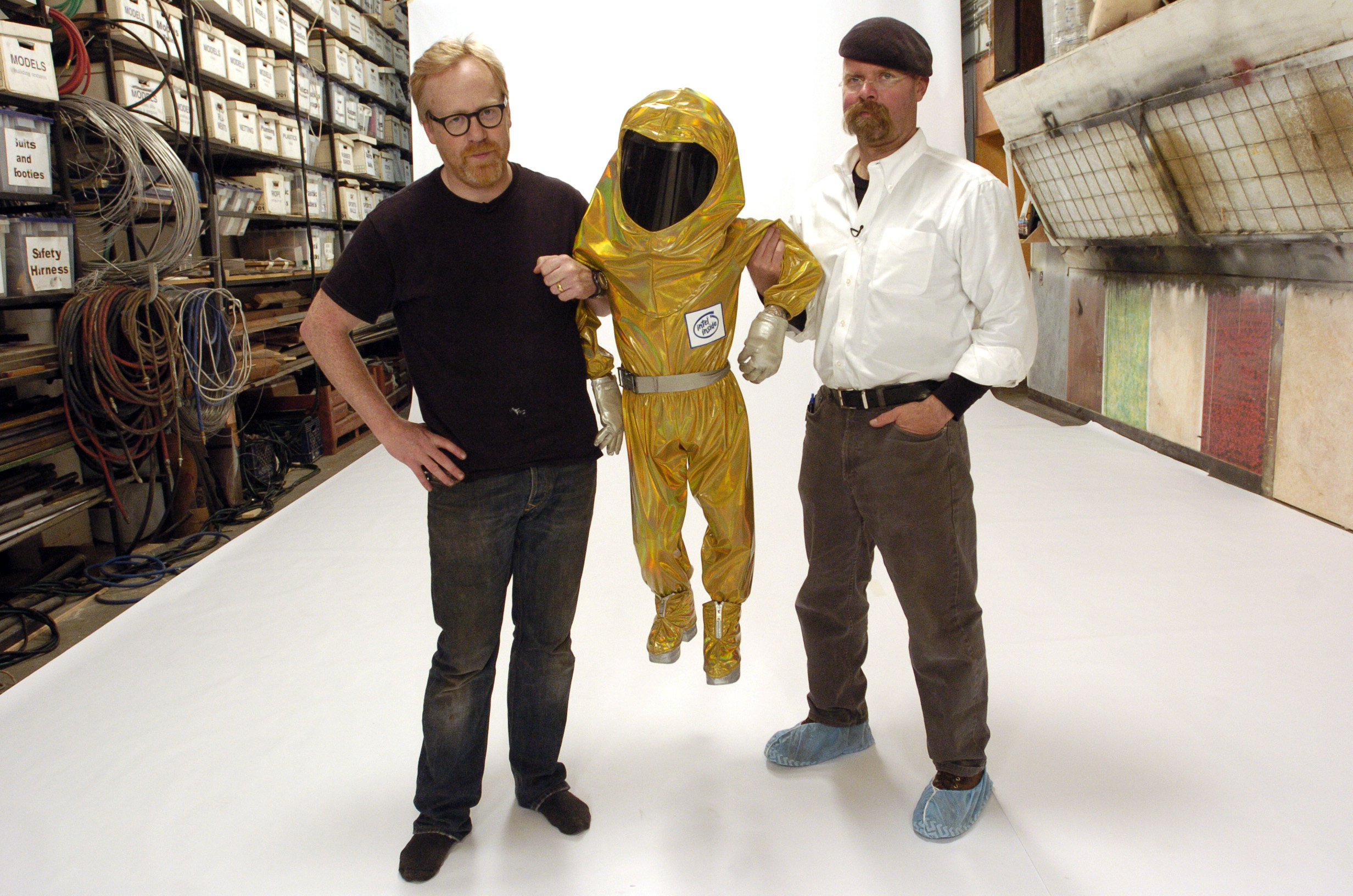
Adam Savage, Intel Bunnyman & Jamie Hyneman

In late April, we got the chance to work with Adam Savage and Jamie Hyneman and with the great San Francisco production company, Carl’s Fine Films to create three short videos.  Shot in HD at the M5 Shop/Studios, this was pulled together in start to finish in about three weeks.  The wonder and wit of Adam and Jamie mixed with the genius of director Carl Willat was full throttle all the way through today.  Embedded videos coming soon.

Moore’s Law Got Me

Adam Savage, Intel Bunnyman & Jamie Hyneman

In late April, we got the chance to work with Adam Savage and Jamie Hyneman and with the great San Francisco production company, Carl’s Fine Films to create three short videos.  Shot in HD at the M5 Shop/Studios, this was pulled together in start to finish in about three weeks.  The wonder and wit of Adam and Jamie mixed with the genius of director Carl Willat was full throttle all the way through today.  Embedded videos coming soon.

Text Stories Loose Luster, Are Video & Audio Different?

Cruisin’ Newsvine I saw this story by NewScientist.com about how online articles loose their luster after about an hour.  Wonder if there is information about Podcasts — audio vs. video? And what about the Long Tail?  I guess the luster can be lost, but interest is dragged along kicking and screaming by the majority of Web surfing information seekers who aren’t living on the bleeding edge?  I gotta dig around more.

Online news articles can lose their appeal in as little as an hour. That is the message from two statistical physicists who analysed the way people access information on the user-driven news site Digg.com. 

Fang Wu and Bernardo Huberman of HP Labs in Palo Alto, California, US, studied Digg in an effort to understand the way online news readers consume stories. Through a statistical analysis of the site, the researchers discovered that just a handful of stories hog most people’s attention and most links seem to lose their appeal in just 69 minutes. Wu and Huberman say the finding could perhaps help website designers find new ways to keep people interested when faced with an avalanche of information.

 Here’s the whole story.

Collecting, Managing & Measuring Content with Dow Jones EVP Clare Hart

Someone smartly reminded me today that I recently said “I run” when people ask about measuring success of Podcasts and social media efforts. No apologies. I run…at the mouth. I share Web 1.0 “download numbers” when I can, but I’m more drawn to Web 2.0 wonders of impact and involvement. Impact of telling a great story and later building on it. Involvement of Intel sharing insight and involvement of interested audiences.

This smart person — and others — rightfully point out that we will need to better manage, collect and measure our Podcasting and Social Media efforts. After all, Intel is a company owned by shareholders. If we’re investing resources, we ought to try and show real benefits. Better management, collection and measurement of our efforts in a replicable way will help all of Intel grow and improve relationships with our audiences.

Here’s a Robert Scoble interview with Dow Jones’ Executive Vice President Clare Hart from February 28, 2007. Possibilities for improving.

[podtech content=http://media1.podtech.net/media/2007/02/PID_010375/Podtech_Clare_Hart_interview.flv&postURL=http://www.podtech.net/home/technology/2252/talking-search-with-dow-jones-vice-president&totalTime=2163000&breadcrumb=2e3be1ce-bf62-4faa-a3d9-8112850821e9]

Mainstream and New Media Meet, But at What Cost?

The Virginia Tech killings showed how mainstream and social media, like the social networking site Facebook, are fitting together to cover news that has a broad audience.  It also reveals a major divide between those embracing technology and those who are trying to first understand it better.  We need both.  San Francisco Chronicle writer Joe Garofoli on April 20, 2007 wrote:  “The questions and concerns about the boundaries of openness are being raised not just by traditional media fuddy-duddies but by leaders of new media, those who often praise the virtues of a “democratized” media world in which anyone can publish his own writing, video or photos.” 

There is a lot of learning ahead of us – ethics, potentially dangerous uses – but there’s no need to reinvent the wheel.  Rather, many are building on lessons learned from the printing press, birth of radio, TV, cable, Internet and now the people at-large who are media producers and worldwide distributors news, information and babble.  Garofoli shows the audience for Fox and CNN on Tuesday, April 17:

  • The 1.8 million people who watched Fox on Monday, the day the shooting occurred, represented a 115 percent jump in ratings over Fox’s average for the first part of this year.

  • CNN’s 1.4 million viewers were a ratings jump of 186 percent for that same period. MSNBC.com had 108.8 million page views Tuesday, a record for the site.

Garofoli provides a variety of soundbites that show how different people and professions are looking at this.  Reading some of these (pasted below), I get the sense that many people are not watching primetime TV shows like CSI, Law&Order and other crime-themed programs.  These shows explore many of the ethical and potentially harmful possibilities that come from a society living with more technology-powered capabilities than ever before.  Most of the storylines may seem fear or protectionist-based, but they allow us to explore possibilities. 

  • Jeff Jarvis wrote on his BuzzMachine.com blog, “There is no control point anymore. When anyone and everyone — witnesses, criminals, victims, commentators, officials and journalists — can publish and broadcast as events happen, there is no longer any guarantee that news and society itself can be filtered, packaged, edited, sanitized, polished, secured.”

  • “It is future shock,” said Micah Sifry, executive editor of the Personal Democracy Forum, a
    New York think-tank that explores the intersections of technology and politics. “The technology has developed so fast that the culture hasn’t caught up with all of it. On one hand, you have the advocates, who want NBC to release all of (Cho’s manifesto). On the other, you have people who are saying, ‘Wait a minute.’ This is a very challenging moment. What works best is an open-networked system. It’s the difference between trusting a few people to make decisions for everyone and trusting many people.”

  • “Conflicted is the right word,” said Dave Winer, a pioneering blogger and influential figure in new media. “Yes, I realize that it’s unfortunate right now that this guy gets to control the discussion. We hadn’t foreseen this use of the technology because, as utopians, we tend to look for the good stuff. I liked to think I had a balanced view, and could see where bloggers weren’t doing good, but I hadn’t seriously considered our tools used to further such a bad cause.   

  • “The lesson for this week is that the news is everywhere. The news is on Facebook,” said Jennifer Sizemore, editor in chief of MSNBC.com. Like other news outlets, MSNBC turned to social networking sites like MySpace and Facebook to find students to interview about the Virginia Tech slayings.  “I don’t view them as the competition,” said Sizemore. “I see them as enlarging the conversation.”

  • “In the end, it’s going to get out there,” said Jay Wallace, executive producer for news at Fox News Channel. “Even if every newspaper and cable news channel doesn’t put it out there, somebody will.  In those early hours, it is a feeding frenzy. We know that people are flipping around everywhere for news.” 

People who are keenly interested will flip through TV, Radio and the Internet, where social media sites offer insight into people’s daily lives.  Sometimes people are flipping through all of these at the same time.

We have more people participating than ever, and lots of interesting viewpoints on how we can move ahead in our rapidly changing, technology-driven, new media-filled lives.  PodTech’s Rio Pesino talks with a good collection of mainstream and new media pros in this vidoe mashup where he asks, “What’s missing form local media?”

[podtech content=http://media1.podtech.net/media/2007/04/PID_010985/Podtech_Topix.flv&postURL=http://www.podtech.net/home/corporate/2765/what-is-missing-from-local-news&totalTime=274000&breadcrumb=f068e474-4564-4ff4-ae59-c0328054e5c8]

Blog as Resume, How About Video Resume?

As resumes move from paper to online profile to blogs, the video resume could soon become a new norm. 

“The blog is your resume,” Jeremiah Owyang told me this week over lunch, refering to his recent blog postA few weeks ago, I wrote about Rohit Bhargava’s story on the Social Media resume.  NY Times’ Abby Ellin on 4/21/07 talks about video resumes, which could make “the blog is your resume” even richer, more meaningful and impactful. 

TV news reporters, anchors and producers have always kept a “reel” of their best work. Their reel was their resume or ticket to getting a new or better job. Other media industry pros do the same. Now since “we are the media,” it seems that short video resumes might be right for anyone with a blog and a career under construction. 

Why not create a good self-made video interview where you answer/address thoughtful questions any potential employer may ask?  

Something related to note, HR Magazine March 2007 cited a study on web conferencing by global consulting company Frost & Sullivan shows this market jumping nearly 300 percent between 2005 and 2011, to $2.9 billion. 

Seeing yourself on video allows you to see how other people really see you. You can see any mannerisms you’re not aware of. Saying the right words with good delivery is important – especially for audio-only interviews (i.e. phone), but seeing your body language immediately triggers trust, confidence and personality. 

First, bone up on “media training” techniques…which really means, think about your audience, what is important to them, how they like to be talked to, and how can you make your story interesting and meaningful to them? Sounds like common sense, but when it comes to you telling your story it might help working with a trusted friend or someone who is media savvy — professional or otherwise.  Or simply find examples you like and emulate, but tell your authentic story while being mindful of your audience. 

Here are some quotes from Abby Ellin’s NY Times’ story 

  • “We live in an on-demand world where people want the most detailed information to make a decision, as well as the ability to make that decision quickly,” said Nicholas Murphy, 27, the co-founder of WorkBlast.com, which aims to help users create online video résumés. It also allows employers to videotape themselves so they can advertise to prospective employees. (Now that’s “two-way”) 
  • “Executives fall into a trap of speaking business-speak,” said Karen Friedman, a media trainer. “While they might speak the language of their subject, it’s like listening to someone who’s stuck in a tunnel. They’re in a fog. The point they really need to get across gets muddled, lost and unfocused. What is it you want the listener to remember about your message when you’re done communicating?
  • Debra Benton , media trainer: People will soon forget what you have accomplished and long remember how you made them feel. That’s true on a date, in a job interview, even in Congress. You can get more of an emotional response if you can tap at the heartstrings.”  Do everything purposefully, and slow down. “Not to the point where you look like you’re dragging with energy, but most of us go too fast; we hurry; we look anxious. The more time you give yourself, the more status people give you. If you slow down, you look calm and make others calm around you. For instance, when shaking hands, pump two and a half times instead of one. You only have seconds to set yourself apart.”

More video interview tips from Karen Friedman: Ace Your Next Media Interview, Every Number Tells A Story, When Bad News Happens to Good People, Just Say It!

Debra Benton offers tips on how to be a good self-coach.  In her article Traits That Make Good Lovers Make Good Leaders, she suggests: “Ask questions. Know what people need and want. Use humor. No one will fault you for lightening the mood. Touch. Figuratively and literally pat people on the back. Initiate. Don’t wait to be asked or prodded. Slow down, shut up, and listen. When you play hard to get they want you more.”

TV & Radio News Facing Revolution

The Radio and Television News Directors Association (RTNDA) is happening this week in Las Vegas along side the annual gathering of the National Association of Broadcasters.

Well respected KGO-TV tech and business reporter David Louie is hosting a panel to help TV reporters file stories from wireless cafes.  A laptop with Wi-Fi connection to the Internet allows a reporter to edit and “file” a story or b-roll from the field.  The technology keeps getting better.  Maybe the wonders of WiMAX could someday soon take things to a new level.

Today I read in the broadcast industry newsletter, ShopTalk, a Television Week story by Elizabeth Jensen. Seeing and embracing change — here are some excerpts from Jensen:

  • “The digital revolution is really hitting home in newsrooms, we find this year, even more than in previous years,” said RTNDA President Barbara Cochran.

  • …the convention played on some of the newsroom’s technology fears with its slogan “Don’t let the digital revolution leave you behind,” Bill Roswell, RTNDA’s chairman-elect and convention producer, has a more embracing outlook. “There’s a brave new world out there that is very exciting,” he said. “We’re not just radio or television stations anymore; we’re information providers.”

  • this year, the topics of interest that came up over and over were such technology challenges as the conversion to high-definition, deciding what material to make available for podcasts or cell phone-casts, how newsrooms can best use Web platforms, the impact of one-person newsgathering, how to bring the audience into the newsgathering process, even the thorny legal issues raised by repurposing material for outlets other than traditional radio and TV broadcasts.

Players involved this year are a nice mix of seasoned journalists, new media pros and technology experts (from Jensen’s story):

  • ABC News video blogger Amanda Congdon: examine “what the next generation of news will look like. [Almost] all the people who are on that panel … come from media organizations or are doing jobs that we wouldn’t have imagined three or four years ago.”

  • Congdon’s session is moderated by CNN’s chief technology correspondent Miles O’Brien, and they’re joined by Zadi Diaz, new-media producer and co-founder of Smashface Productions; Terry Heaton, senior VP, Media 2.0, audience research and development; Elizabeth Osder, senior director of product for Yahoo News; and Michael Rosenblum of Rosenblum Associates, a pioneer in the single-person video journalism world.

For better or worse, in the Bay Area we’ve seen and felt the revolution for quiet some time.  At KRON-TV in the early to mid 1990s, launched their Website and were among the first broadcasters to make news video stories available online.  The station also launched a cable channel called BayTV, where I saw for the first time a “one man band” daily news pro producing, scripting, shooting, editing and reporting.  That was crazy to me!  In 2000, thing began changing even more dramatically and today we’re seeing “single person video journalism” on the flagship KRON newscasts inspired by Rosenblum.

Those may be fundamental changes, but what I learned visiting KNTV this month is even more exciting.  How can boradcasters work together with people — bloggers, citizen journalists — to make the daily news more meaningful to the community.  That pursuit has always driven the best local TV and radio newsrooms.  More people seem to agree that there may be potential benefits to “building community” “reaching out” “involving” the community, rather than just reporting on the community.  This was a major topic exlpored duing the first Silicon Valley Chapter of the Social Media Club, hosted at KNTV.  Here’s a link to my earlier post and links to more info from that meeting from Mario Sundar.

Lots of momentum for change and it’s inspiring to see professionals from different industries come together.  Maybe the real things to observe here:

  1. Technology is ever more important to every industry

  2. Social media is allowing more people to try new things, getting more people involved and participating