
– Posted using MobyPicture.com

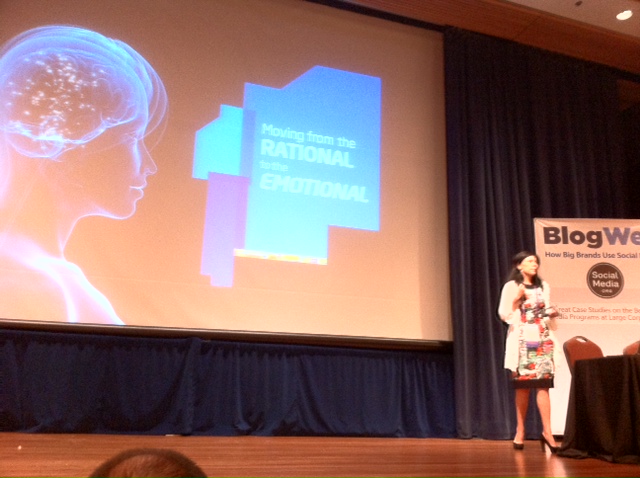
Got Your Name Google Alert On?
Getting a Google Alert monitoring your name is essential. Made sense when I heard Intel blog pioneer Josh Bancroft mention it over a year ago. And it proved exceptionally useful and quick this week at the New Comm Forum 2008.

Rohit was hosting a panel on new communications strategies called “The Future of Marketing & Advertising” featuring:
Neil Chase from Federated Media – publishers and networks
David Takheim from Six Apart – platforms and publishing toolsKen Kaplan — me — offering stories from inside Intel
In keeping with the fast and real-time world we’re living in, Rohit encouraged the panalists to keep it raw and share their own insights. On the morning of the event, he sent out this blog post listing questions that could help shape the discussion. About one hour later, Neil and David arrived inside the room ready to go. One of the first things both guys said was: “Thanks for the questions, I just got them in Google Alerts.”
For me, this was the first time I saw Google Alerts work so well, in a timely manner. I’ve used Twitter for quick hook ups before, but this showed the power of blogs, search engines and being tapped into what’s important to “you.”
The panel was well attended with a fully engaged audience asking great, real-work world questions by the likes of Tim Marklein of Weber Shandwick PR and Jennifer McClure, maven of the Society for New Communications Research and the wonderful host of NewComm Forum event. Here’s what Rohit had to say after the panel:
I really enjoyed hearing from Neil and David what’s working and how much hard work is going into to relationship building, making connections and helping more people learn how to use new tools. At Intel, we’re trying a lot of new things thanks for my pal David Veneski teaming up with Federated Media. And Six Apart seems like a part of the Intel family, and continues to try new things, building new services into blogging platforms.
The event pulled together some great people, including Tom Foremski, Shel Israel, Joseph Jaffe , Katie Paine , John Cass (I had the pleasure of meeting — see earlier post), Shel Holtz , Todd Defren , Brian Solis, Geoff Livingston and Giovanni Rodriguez.
The New Comm Forum is an event brimming with good arguments and storytelling that help communication pros see where they are, how they got there and how to move ahead…with a little help from our friends.
Groundswell’s on My Bookstack

Groundswell Books, originally uploaded by Forrester Research, Inc..
This photo was taken at the Forrester Research Marketing summit this week — really wish I could’ve been there. But I did follow some of the action Jeremiah Owyang shared on his blog.
Forrester shared a copy with me — it arrived from Boston a few weeks ago. I gotta get into it. My Intel buddy Neil is approaching chapter three and he gave me the thumbs up.
I got to help Charlene Li connect with some Intel social media pioneers, including Josh Bancroft, who told how he created Intel’s first company Wiki called Intelpedia.

Intel’s Bob Duffy on Stage at Web 2.0 Expo in SF
My pals inside Intel are looking forward to Web 2.0 Expo, April 22-25 in San Francisco — follow the event blog here.
I’m hoping many (at least those based in or near the Bay Area) get to be on the scene. For sure, one great Intel community guy will be there — Bob Duffy.
Bob’s in my social media posse, and he has been helping Intel move from blogging into communities and helping experts get more involved off of Intel sites, where IT pros, consumers and other tech lovers might be asking for insight that Intel can share. He helped compile data, tools and experts to legitimize Intel’s branded community for IT Pros called Open Port. He’s now climbing the ladder to get a better view and help other groups and community minded managers benefit from best practices, and to integrate with existing and ongoing community efforts. For me, he’s in the right place in the right time — for him and for Intel. He’s a listener, participant and skilled at crystalizing powerful notions blended with data to help teams break down silos, harness expertise, ignite interest in activities beyond those inside Intel… He helps us move ahead because he’s thoughtful, inclusive, he’s involved online and takes time to meet and share interests and insights offline.
Sometimes, I see Intel trying to create products or solutions that will meet future demands. There may not be a huge need today for “Dunnington” 6-core processors because many applications are even multi-threaded to take advantage of dual core processors — but there’s tons of working going on to help get software to work ever better with new hardware. On the other hand, things like data security defense and power efficiency needs are top of mind, but often many don’t know that Intel engineers and products can help. New features are being built right into the latest chips at a faster, more predictable rate than ever before (i.e Intel’s “tick-tock” method of new chip design followed by new cycle of product process improvements followed by new chip design…).
This is where Intel marketing teams can step in and help. Finding the right communication tools and identifying pools of conversations can connect Intel technology experts with the growing number people and companies who might benefit from what Intel insiders are working on.
Here are some examples of IT stories and topics Intel experts are exploring on Open Port.
Here’s Bob talking in August 2007, just before the virtual doors were opened at Open Port
[podtech content=http://media1.podtech.net/media/2007/08/PID_012329/Podtech_MV_at_INTEL_Folsom.flv&postURL=http://www.podtech.net/home/4122/intels-online-strategists-insights-into-community-building&totalTime=489000&breadcrumb=d4bdc99c5a9f4fca89b8d7d9c50aba8b]
Bob will be joining the social computing wiseman, Forrester Research’s Jeremiah Owyang, on this day two panel:
8:30am – 9:20am Wednesday, 04/23/2008 “Community Building: Good, Bad, and Ugly”
Dawn Foster (Jive Software), Jeremiah Owyang (Forrester Research), Bob Duffy (Intel), Kellie Parker (PC World & Macworld). A great community requires considerable forethought, attention to technology, and a dose of know-how to manage the unruly. Read more.
Full schedule of Web 2.0 sessions here.
During Web 2.0 Expo, I’m also looking forward to seeing the winners of CNET’s WebWare 100.
Hope to see you at the expo Tuesday or Friday. That week, I’ll be joining Ogilvy’s Rohit Bhargava at the New Communication Forum April 24 at 10:00 a.m. PT. Rohit is moderating a panel called “Future of Marketing and Advertising.” More on the New Comm Forum in a future post. I’m looking forward to catching up with Rohit after giving birth to a timely book called “Personality Not Included — Why Brands Lose Their Authenticity and How Great Companies Get It Back.” Learn more on his great blog.
Brand Engagement = Social Media + Storytelling
[podtech content=http://media1.podtech.net/media/2008/03/PID_013457/Podtech_Video_Brochure_2008.flv&postURL=http://www.podtech.net/home/5018/brand-engagement-social-media-storytelling&totalTime=351000&breadcrumb=7bb05717feed4aa0b5fcf98bcea3aea9]
This is from Jennifer Jones of PodTech’s “Marketing Voices — an episode worth repeating…
The many online social media have become an important part of the marketing mix for many corporations and organizations. Whether it means listening to online conversations, participating in communities of enthusiasts, clients, consumers or social networks, or simply increasing transparency, understanding how social media can be made to work for you is key to building stronger brand engagement and loyalty. It’s also going to save you money. But how?
In this video podcast, Marketing Voices’ Jennifer Jones, and others, talk with industry insiders to find out how combining social media with the art of storytelling in blogs, wikis and podcasts will foster conversations, convert incremental audience, and ultimately increase audiences’ engagement with brands. How can you use social media to create a voice for your brand that resonates beyond your corporate Web site? How can syndication help move your brand’s voice to your audiences, and bring those audiences back to your brand?
Intel’s own Atom Ant
[podtech content=http://media1.podtech.net/media/2008/03/PID_013418/Podtech_Intel_Atom_Gary_Wilihnganz.flv&postURL=http://www.podtech.net/home/4949/intel-atom-chip-packs-internet-in-your-pocket&totalTime=36000&breadcrumb=08705cbbdbb143f49f42cee0174465e9]This is one of four videos we shot and shared online for the launch of Intel Atom and Intel Centrino Atom, Intel’s tiniest processor to date. It’s built with Intel’s smallest (45nm) transistors in production and designed to sip battery juice while packing a punch inside small, light Internet devices.
We’ll see more “real” devices when the chips are releases to gadget and gizmo makers in the second quarter of this year.
Here is where we can watch what people are saying online. Here are some bookmarked stories on del.icio.us and StumbleUpon.
Riffin’ on Storytelling @ Community Roundtable

Picture 224, originally uploaded by jeremiah_owyang.
This is a photo by Jeremiah Owyang, who invited me to the Online Community Roundtable gathering he hosted at Forrester. Bill Johnson put on this wonderful event with very engaged people who were sharing their wisdom and online audience building experiences. Jeremiah made sure I got up and spoke. Nothing prepared, I started with my favorite topic of storytelling and tried to connect with what everyone in the room was talking about. The audience pulled me in and along we went, having fun playing with the role of storytelling in social media, social networks, online communities…and our personal lives.
A presentation highlight for me was Forrester’s Charlene Li’s “I am social when I…” Use IM, email, social network, bookmark… More of us are getting more social every day.
Here’s Bill’s even summary and a post with photos and a video by Jeremiah.
This would be a great event for a few pals who are helping grow the Intel’s Open Port online community for IT pros. This is a creative, open model that could replace regular weekly meetings at work. Just get three people to share what they’re working on and get the live feedback from a concentrated, open-minded group. Who would you invite?
Person Bill Johnson
Right click for SmartMenu shortcuts
My BookStack February 2008
 BookStack_Feb2008, originally uploaded by KenEKaplan.
This is a follow up to my first “BookStack” post, which was inspired by a social media wiseman, Douglas Pollei.
After I finish Seth Godin’s new book “Meatball Sundae,” I’m movin’ ahead to my next stack of books for the year.
Some of these I already finished:
* “Let Your Life Speak,” a book about listening for the voice of vocation by Parker J. Palmer.
* “Who Moved My Cheese,” which is about how we can get unstuck when we need to change by Spencer Johnson, M.D. (a quick read on a plane ride).
But I’d like to mix in some more mind exercises with storytelling, marketing and communications. Some of these are a few years old, but here they are:
* “Mashup Corporation,” about the culture of communications change in the corporate world by Andy Mulholland, Chris S. Thomas, Paul Kurchina and Dan Woods.
* Seth Godin’s legendary “Permission Marketing,” which I believe is inside me already, but I want to get it in Seth’s words.
* “A Whole New Mind,” is about why right-brainers will rule the future by Daniel Pink. Not so sure I believe that yet, so it’ll be cool to feel my reaction.
* “The Springboard” is a book by Stephen Denning, who outlines how storytelling ignites action in knowledge-era organization. I’m a big fan of storytelling!
 Movin' Ahead